
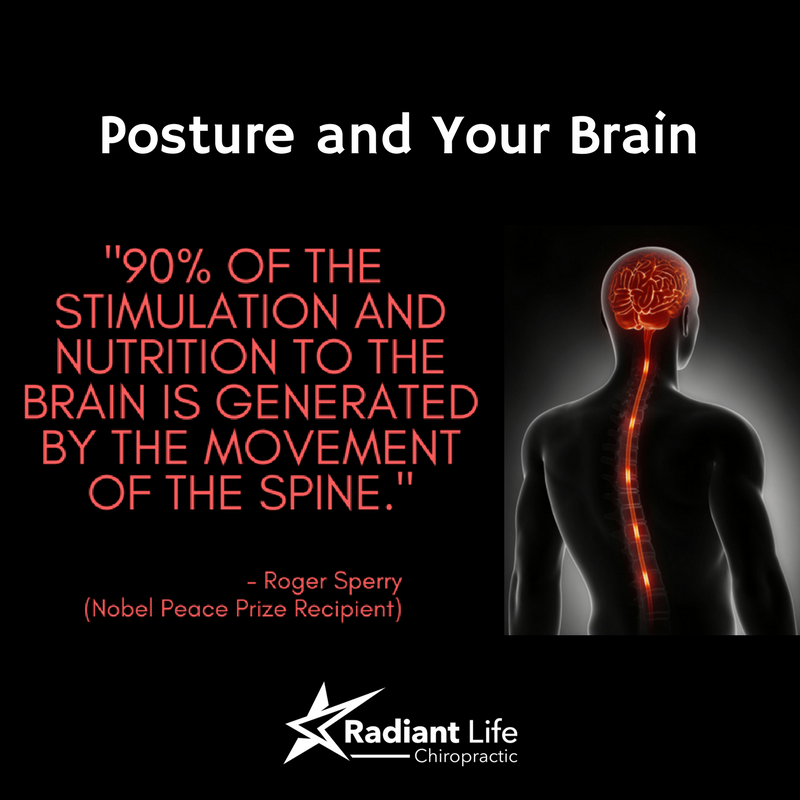
Posture and Your Brain
Psychologist and neurobiologist Dr. Roger Sperry won the Nobel Prize in Physiology and Medicine in 1981 for his research on the function of the brain. As you know, your brain is responsible for reacting to your environment, running your internal metabolism, as well as thinking and decision-making. You need your brain for everything you do – and if your brain isn’t as healthy as it could be, it compromises the way your body works. Dr. Sperry, renowned brain scientist, stated, “90% of the stimulation and nutrition to the brain is generated by the movement of the spine.”
 This means that having a healthy spine is essential if you want a healthy brain, and this is the leading reason why you and your family need to take the best care possible of your spine – not only does it reduce the likelihood of painful problems, it enhances your brain function which makes you healthier in every way. The first thing you can do to take care of your spine is to develop the habit of good posture. According to the American Posture Institute (API), “Modern sedentary living, misalignments and faulty movements in the spine combined with poor posture diminish nutrition and stimulation to the brain. How well we eat, move, think, connect and cope with stress determines our destiny.”
What is posture anyway? Posture is the position you hold yourself in, standing, sitting or lying down. It’s the way you deal with gravity, which exerts a constant downward pull on your body. Your posture is the sum of the alignment and movement of all the bones and muscles in your body, especially your spine. The API website says, “Good posture involves training your body to stand, walk, sit and lie in positions where the least strain is placed on supporting muscles and ligaments during movement or weight-bearing activities.” This means that proper alignment and movement reduces the stress on your spine, and that translates directly into a healthier brain.
It’s important for anyone to maintain a healthy posture, but it’s especially important for young people – because young people with poor posture habits turn into sicker adults.
To find your best posture, start by standing whatever you think is straight. Now, look down, and be sure your feet are straight, and about hip or shoulder width apart. Divide your weight evenly over your legs with your knees relaxed and let your arms dangle naturally by your sides. Position your shoulders above your hips, and your head above your shoulders. From the side, your ears, shoulders and hips should be aligned.
How about when you’re sitting? You want to aim for keeping both feet flat on the floor with your knees level with your hips. So, pick a chair that is at that height or can be adjusted to it. Sit back in the chair, and if you need extra support in the lower back, use a cushion or rolled up towel. Keeping your neck and upper back straight but relaxed, tuck your chin and stretch your neck a bit, so your head reaches toward the ceiling. If you need to, use a stool or footrest under your feet.
Sleeping posture is also critically important, since you spend between a quarter and a third of your life in bed. There are many valid sleeping positions, and your comfort will be a great determining factor. But most usually, sleeping on your back is ideal, with your neck supported but not pushed forward, and your knees slightly broken with a pillow or cushion. It’s just as good to sleep on your side, with a pillow between your knees if desired and enough height on your head pillow to keep your neck straight. Sleeping face down with your head turned all the way to one side all night is least beneficial for your spinal health. Keeping your spine straight while you sleep promotes relaxation, so you awaken more refreshed and rested.
Maintaining a healthy posture, whether you’re standing, sitting or lying down, is essential for good brain function. Work with your family members to remind each other to stand up straight, and it will reward you – you’ll feel better, look better, be healthier and you’ll keep your brain working at peak efficiency!

 So here are four common lifestyle choices that hurt your brain.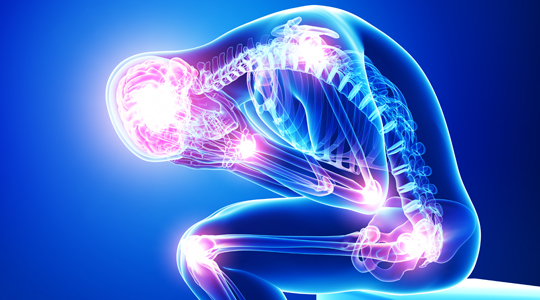
 out other potential causes and verifying the presence of a set number of other symptoms. Medical doctors treat fibromyalgia with a blend of pain medications.
 Thirty-one pairs of nerves are rooted to the spinal cord and they control body movements and transmit signals from the body to the brain. You can sprain ligaments, strain muscles, rupture discs, irritate joints, and impinge nerves, all of which can lead to back pain. When nerve roots in the low back that join to form the sciatic nerve are involved, people may also experience sciatica symptoms such as pain into the buttocks, to the hip, or down the leg. While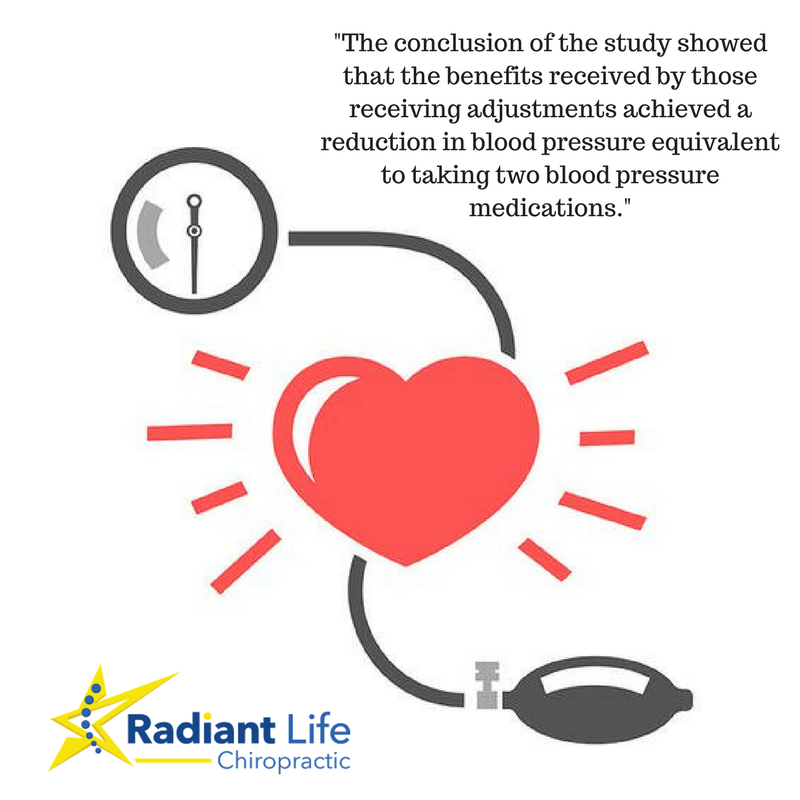
 provide millions of people with incentive enough to implement chiropractic care as part of their weekly and monthly health regimens. Tom Brady has earned recognition as one of the greatest quarterbacks to ever play professional football. He proudly visits a chiropractor on a weekly basis to maximize his physical performance. Most college, professional, and Olympic athletes utilize the


 Masha and Dasha were conjoined twins born in Russia in the 1950’s. They each had one arm and shared one pair of legs. Due to the fusion, many of their internal organs were the same. Though they each had a separate heart, the system that circulated all the blood (circulatory system) was the same. The revolutionary point of their story focuses on their having separate nervous systems. Their brains and spinal cords did not connect. The separate nervous systems created fascinating instances where one twin would become ill while the other did not. The germs of the sick twin would flow through the shared blood of both twins. While one would experience symptoms from the flu or measles virus, the other twin would be symptom free.
 Important nutrients delivered to the brain through proper alignment and movement of the spine account for why chiropractic spinal care is so important. A study published in 2011 explained that a specialized group of hormones play a significant role in why chiropractic adjustments achieve such significant health results. Hormones serve as chemical messengers that secrete directly into the blood and before being carried to organs and tissues to help direct function. Any procedure that influences hormones will powerfully and directly influence all bodily functions. Optimal health and performance only occurs when hormones are balanced and coordinated.
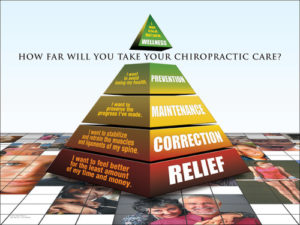 and injury prevention.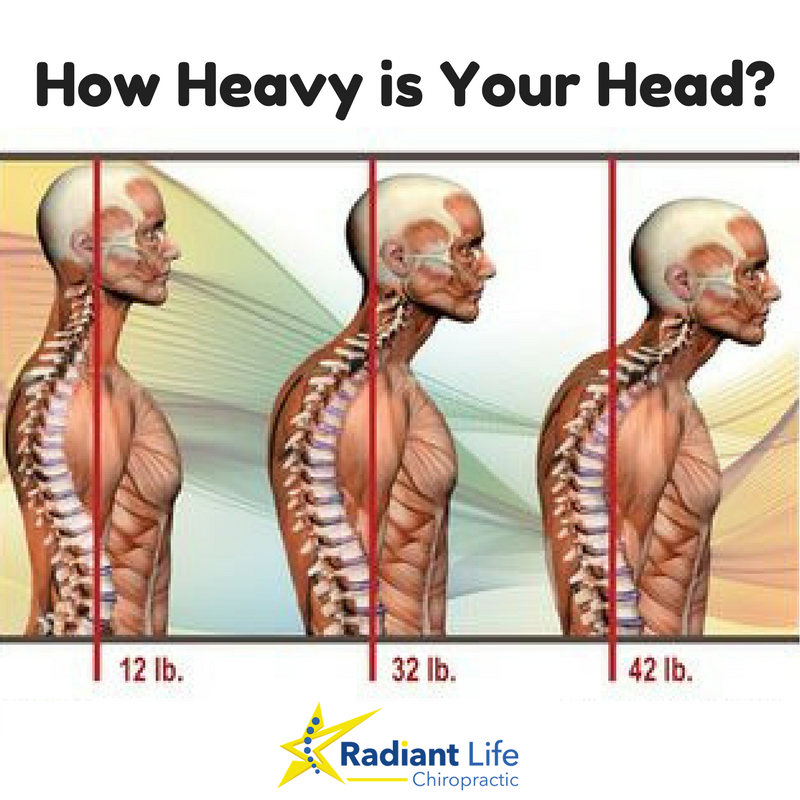
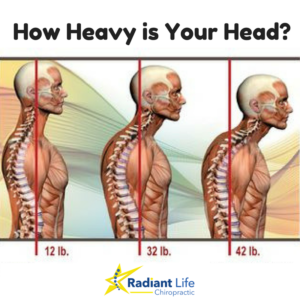 Understanding forward head posture and how this creates the potential for injury and chronic musculoskeletal problems is extremely important. Normally, looking at someone from the side, the ear should be directly over the shoulder. As you can see in the image, for every 1 inch the head moves forward, it increases the force stressing the head and spine by 10 pounds. Not only does it increase the loading on the spine, which over time can lead to degeneration and wearing of discs and joints in the spine, it also causes certain muscles and ligaments to become “facilitated.” This means they must contract much harder to maintain that forward head posture. Think about holding 12-15 lbs (the weight of a bowling ball and the weight of your head), out away from your body. It would be harder to hold there than close to the body, right? Well, this is like the weight and stress we are placing on our spine and weight-bearing joints.