Top 5 Chiropractic Myths Busted

Being a third-generation chiropractor, I grew up with chiropractic, and it is very familiar to me. However, for the public, there are plenty of myths out there regarding the profession that can cause some confusion. If you are looking for a chiropractor in Hatboro or the surrounding area, we wanted to straighten out a few of those myths so you can be better informed in your search.

  1. Myth: Chiropractic is dangerous/chiropractic adjustments hurt.

Reality: Insurance companies understand risk, and chiropractors have much lower malpractice rates than medical doctors because chiropractic does not have the risks that come with prescribing medications and performing surgery. Chiropractic does not add anything to the body or take anything away, and it is very inherently safe. At our office, we use state-of-the-art technology and newer techniques that make care more specific and gentle for the patient.

  1. Myth: Chiropractic is only for neck pain, back pain and headaches.

Reality: Chiropractic has had good results with cases of neck pain, back pain and headaches. However, our focus is on the nervous system because it controls and coordinates everything going on in the body. By focusing on improving function of the body, a lot of the aches, pains and dysfunctions take care of themselves. We have seen improvements with things like digestive issues, posture, and blood pressure by increasing nervous system function.

  1. Myth: Once you go to a chiropractor, you must go for the rest of your life.

Reality: The reality is that you, as the patient, can decide to do whatever you want. In our office, there is an initial corrective phase of care. After that, many patients choose to continue to value taking care of their nervous system with less frequent wellness visits (similar to continuing to go to the gym, eating healthy, proactive visits to the dentist), but the choice is up to you!

  1. Myth: Pregnant women and kids should not get adjusted.

Reality: Chiropractic during pregnancy can help alleviate the back pain and sciatica that many women experience. In addition to the aches and pains, research has shown that pregnant women under chiropractic care have shorter, less painful deliveries with less medical intervention. This is something we believe women should know! The modern birthing process is not only difficult on mom, but also on the baby. Many parents choose to have their kids checked for nervous system interference early in life to make sure they are healthy. Healthy kids tend to grow up to be healthy adults.

  1. Myth: My insurance covers all my chiropractic needs.

Reality: Unfortunately, “health” insurance doesn’t always cover everything we need to be truly healthy, and that is frustrating. Often, it does not pay for our gym memberships or organic fruits and vegetables at the grocery store. Similarly, it may not cover all your chiropractic needs. However, at our office, we offer a complimentary insurance benefits check to see what will and will not be covered before you incur any charges. We work to maximize coverage and have other programs to make care affordable in case you are uninsured or underinsured.

Hopefully, busting some of those myths was helpful. Please share this with a family member or friend who is confused about what chiropractic is, and if you have any additional questions, feel free to email us at info@getradiantlife.com or call the office at 215-259-5100.

The 3 T’s of Dis-ease and What to Do About Them

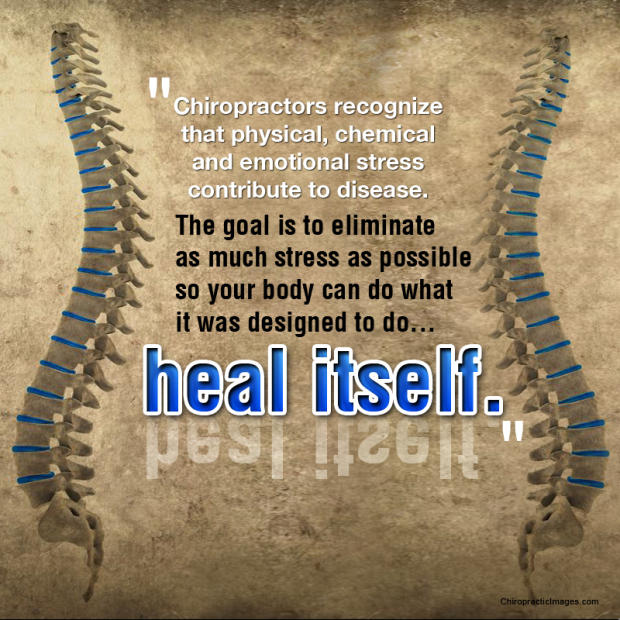
In 1910, D.D. Palmer, the founder of chiropractic, stated that there were three underlying causes of subluxation, or nerve interference. He identified them as the 3 T’s: thoughts, trauma and toxins. Today, these 3 T’s continue to wreak havoc on our bodies and contribute to many of the aches, pains and dysfunctions that we experience.

  • Trauma: Trauma as a cause of our issues is easy to understand for most people. Whether it is a major trauma, such as a car accident or slip and fall, or a repetitive microtrauma, such as sitting at a desk for 8 hours, trauma can have a huge impact on both how we feel and function.
  • Toxins: Toxins refer to what we put into our bodies. Today’s diet high in sugar, white flour, and genetically-modified organisms doesn’t exactly promote good health. Many things we eat are highly inflammatory to our bodies. Other forms of toxins are environmental toxins such as water pollution and mold.
  • Thoughts: Thoughts are what most people tend to ignore. Our highly stressful lifestyle gets us stuck in a sympathetic state. If you remember back to science class, this is the fight-or-flight stress response. When we are constantly in this state, it can alter our hormones and trigger a negative cascade in the body. The stress response can be beneficial in the short term, but chronically being in this state can cause our health to break down and deteriorate.

WHAT CAN WE DO TO COMBAT THE 3 T’S

When it comes to health, most people are looking for the quick fix that doesn’t exist. Unfortunately, to create positive long-term changes, there is no magic diet, no easy exercise regimen, and no simple mental cleanse. The idea of being healthy is not complicated. All you need to do is eat well, move often, and think good thoughts. The action is where it becomes hard.

  • Eating well takes discipline and planning. It also requires people to cut through trendy, confusing, and often conflicting information about nutrition. Taking a small step in the right direction is a good, sustainable start and can be built upon moving forward.
  • Moving often refers to staying active and exercising. Even consistent, brisk walking is a positive place to start for many people. Another aspect of moving is how our body’s physically move. Chiropractic adjustments can help improve spinal movement and overall posture. Chiropractic is not the only aspect of health, but it is essential because I do not know how you can be truly healthy if your nervous system is not functioning at its optimal level.
  • Correcting our thoughts is difficult for some people. Often, we may be active and watch what we eat, but we do not always guard what we allow in our heads. We are constantly being bombarded with new information, and it is important to protect our mindset. Activities like mediation, yoga, deep breathing techniques, etc. can be beneficial for us to unplug, de-stress, and re-center our thoughts.

Our goal is to help transform the health of our Bucks and Montgomery County community without the use of drugs or surgery. If you want to see how your body is functioning or need help achieving your health goals, give us a call to schedule a complimentary consultation!

Thinking about getting into meditation? Read this first

Research shows chronic, sustained stress can take a huge toll on our health, and as long as we are living, we are guaranteed to experience stress. Because of this, it is greatly beneficial to find an activity that helps you relax and get out of that fight-or-flight response. I have tried a lot of different things such as exercise, deep breathing techniques, reading, yoga, and meditation with varied stress-reducing success. I always read about the awesome health effects of meditation, but it was hard for me to get into the routine of meditating consistently because I felt like I was bad at it. I thought I was supposed to turn my brain off and just sit in silence, and that was never going to happen for me. My millennial, overstimulated brain wouldn’t let me do that.

Then, I read Vishen Lakhiani’s book The Code of the Extraordinary Mind. I appreciated that the author, a meditation guru, stated that (for most people) it is impossible to meditate like a monk. We have busy lives and asking our brains to turn off is not realistic, so he developed an active meditation practice called 6 Phase Meditation. The 6 Phase Meditation is broken into 6 sections:

  1. Connection: focus on your consciousness connecting with every other living thing on Earth.
  2. Gratitude: go through 3 to 5 things that you are grateful for in your personal life, 3 to 5 things that you are grateful for in your business life, and 3 to 5 things that you are grateful for about yourself.
  3. Forgiveness: recall a conflict, re-live it for a minute, ask for forgiveness, and forgive the other person for wronging you.
  4. Visualizing Your Perfect Future: visualize how your life will be in 3 years focusing on how you will grow, what you will contribute, and what experiences you will have.
  5. Daily Intention: visualize your day’s activities unfolding perfectly so that you are on your path to your perfect 3-year future.
  6. Blessing: call on your higher power or inner strength to help guide and support you in your day so that you can achieve your perfect future.

The 6 Phase Meditation has been effective for me because my mind can actively think while meditating. It is nice because you get the benefits of not just meditation, but also gratitude, forgiveness and visualization. Pass this along to someone you know who needs a little stress relief, who is thinking about beginning meditation, or who wants to meditate but thinks that they can’t. The 6 Phase has made it easy for me to make meditation a part of my morning routine.

Poor Posture: A Modern Day Epidemic

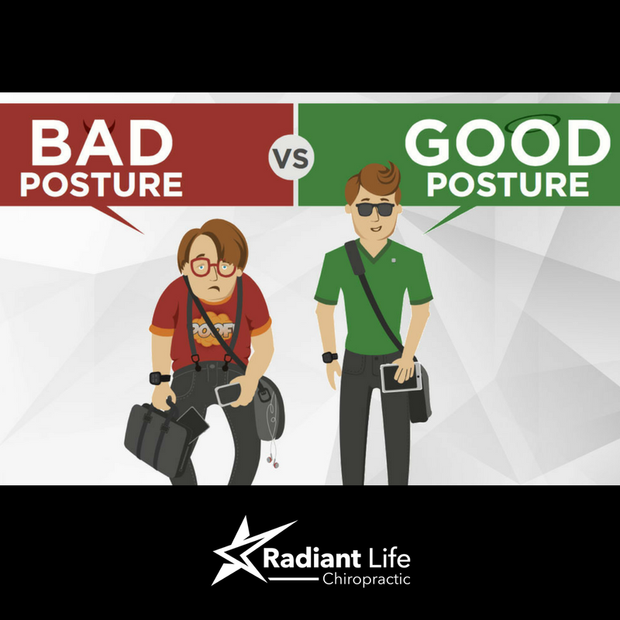
So often, I hear people acknowledge that they have bad posture and then minimize it by laughing it off. Most of the time, they are part of the portion (60%) of the work force that spends nearly eight hours in a seated position at a desk or using technology. Posture is so important, though, and probably shouldn’t be a laughing matter. It is one of the only aspects of health that, when improved, makes you look better, feel better, and function better. Posture is a great window into how well your body is working; it is more than just some aches and pains in the neck and upper back or an aesthetic problem.

Poor posture is a modern-day epidemic. Research has shown that children as young as 10 years of age are demonstrating spinal degeneration on x-ray. Certain postures, like forward head posture, have been linked to migraines, high blood pressure, and decreased lung capacity (less oxygen to your body). A 2004 study in the Journal of American Geriatric Society even showed a significant relationship between bad posture and early death. If you have bad posture, then it is a good news-bad news scenario. Obviously, the bad news is that poor posture has some negatives (and we didn’t even touch on the relationships with self-esteem and confidence), but the good news is that it can be improved.

WHAT CAN YOU DO ABOUT IT

  • Be conscious about your posture: Posture is largely controlled by lifestyle habits, not age or genetics. A huge start to improving posture is to be mindful of your posture. Much of our bad posture can be attributed to bad habits. Over the next couple of days, take note of times during your day in which your posture isn’t so great. It could be sitting at your desk, driving, etc. Once you know when your posture tends to be bad, you can plant some posture cues to remind you to check and improve it.
  • Take posture breaks: Unfortunately, due to our lifestyles, we have deconditioned ourselves to the point that our spines have trouble maintaining proper posture for longer than 20 minutes. Because of this, posture breaks are very important. It is not how many hours of sitting that is bad; it is how often you interrupt that sitting posture that is good for you. Every 30 minutes, take a 30 second to 2-minute-long posture break. During this break, stand up and stretch to reverse the flexed posture that settles in during sitting.
  • Go see a chiropractor: Of course, I was going to recommend this one. The ABCS of posture consist of alignment, balance, core control, and strengthening/stretching muscles. Chiropractors excel with alignment, but they can also give pointers to improve the other components of posture.

CORPORATE POSTURE PROGRAM

For businesses, we have developed a corporate posture program. The following is what is covered in the Corporate Posture Program:

  • Impact of posture on communication and sales
  • The posture-health connection. How posture affects overall health
  • Proper ergonomic design
  • How to improve posture/prevent injury (ex: lifting techniques), including immediately valuable takeaways
  • Positive effects of exercise and diet on productivity

Why is this program valuable?

  • Research supports that the implementation of proper posture and ergonomic utilization of equipment while working will increase productivity by 54%, decrease absenteeism by 67%, a reduction of 93% in worker’s compensation cases, and a decreased employee turnover of 94%
  • The number one reason for absenteeism among employees is due to musculoskeletal disorders
  • 80% of people have had or currently have back pain

How does the program work?

  • Most often for companies, we come in during a team/staff meeting
  • In the past, we have provided food appropriate for the time of day (lunch/breakfast)
  • We can adapt our program to different lengths of presentation time

For an appointment to have a complimentary consultation and posture check or to inquire more about the corporate posture program, call 215-259-5100 today!

Pain has a Purpose. Learn to Appreciate it

Pain is no fun. For some people, it can be frustrating. For others, it can be debilitating. Sometimes, it is a chronic pain that lingers and just pushes us over our threshold so that it interferes with our normal activities. Some people just accept the thought that they have to learn to live with pain. No matter what type of pain it is, no one enjoys experiencing it, and we weren’t designed to live in pain. However, pain plays an important role in the body, and we should try to learn to appreciate it.

Pain is an important signal to alert us that something is wrong. It gets our attention to motivate us to investigate what is not functioning correctly. Pain is not the actual issue, but often, we treat it like it is. Instead of trying to figure out what is going on behind the pain and understand why the body is hurting, we aim to mask the pain with drugs. However, this is a shortsighted approach because we are ignoring the root issue.

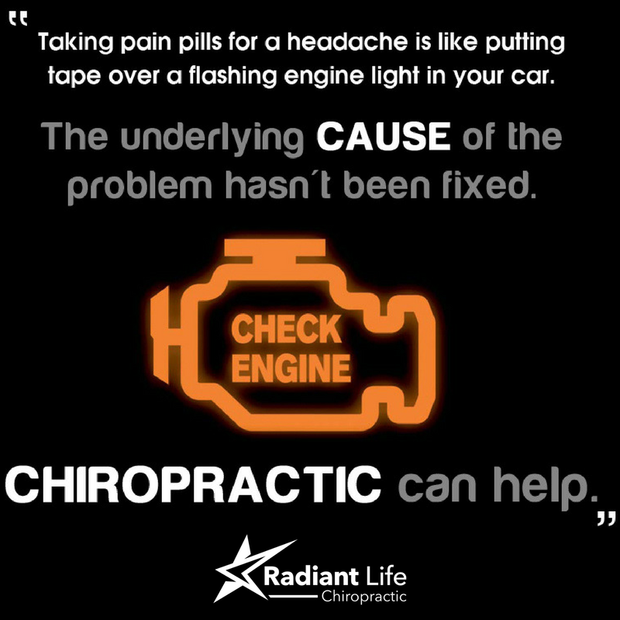
Two analogies may help illustrate this. First, we can think of pain as a fire alarm. When your house is on fire and the fire alarm is going off, do you get frustrated with the alarm, disconnect it, and let the fire rage on? I hope not. It wouldn’t make sense to ignore the reason why the alarm is making noise. You can also think of pain similarly to the check engine light in your car. When you see that dreaded light turn on while driving, do you just take a piece of duct tape out and cover it up? Problem solved, right? No, most people take the car to a mechanic who will try to figure out why the light is on. You wouldn’t want to ruin your engine.

The same can be said for pain in the body. If you experience chronic, debilitating headaches, does it make sense to take painkillers daily? Sure, you may experience less pain, but it is not a long-term solution (and we won’t event talk about the negative effects that come with long-term use). Painkilling medications do not correct any underlying cause of the headaches; they just turn the warning signal off. Wouldn’t it make more sense to see if there was a physical, nutritional or emotional cause that could be addressed to provide a true solution to the pain.

Like it or not, pain is a necessary discomfort of life. It actually provides a lot of value if you are willing to listen to it. If you are experiencing pain and would like to receive a complimentary consultation to see if we can help address a potential root cause, then call 215-259-5100 or email info@getradiantlife.com today!

Are you Pregnant? Why Chiropractic Care Can Help Result in a Shorter, Less Painful Delivery

People sometimes look at me funny when I talk about chiropractic during pregnancy. They think that a pregnant woman shouldn’t be adjusted, but that is far from the truth. In reality, all pregnant woman should consider being under chiropractic care. Approximately 75% of pregnant women experience one or more episodes of low back pain due to added strain. Research has also shown that regular chiropractic check-ups and adjustments improve the labor and delivery process along with producing faster births and decreased need for drugs and other interventions. Here’s a couple of reasons why this makes sense:

  1. Chiropractic is not just about neck pain, back pain and headaches; it is about the nervous system. If this is new to you, see our blog about chiropractic myths. The nervous system controls and coordinates everything in the body, including the muscles of the uterus. Chiropractic seeks to maintain the communication between the brain and the rest of the body so that there is no interference in the communication to organs like the uterus. Proper nerve control of organs vital to pregnancy can help ensure a healthier pregnancy and delivery.
  2. If you think about it biomechanically, there is a lot more stress and strain being put on the lower back and pelvic regions. This can cause some misalignment of these structures and lead to some of the aches and pains commonly experienced during pregnancy. However, an even more important effect of a misaligned pelvis is a less-than-optimal structure for delivery. Chiropractic can help maximize the structure so there is space for a natural birth.
  3. Finally, the position of the baby is important to the delivery process too. Special ligaments attach the uterus to the bones of the pelvis. When there is misalignment of these bones (i.e. the sacrum), this can cause the ligaments to pull and put tension on the uterus. Developing babies innately know the best position for delivery and will try to move into that position unless inhibited in some way. If there is a lot of tension on the uterus, the baby may be limited in his/her motion. By gently adjusting the sacrum, proper realignment can be restored, thus, limiting stress on the uterus.

After previously working in a practice in Georgia predominantly focused on pregnancy and pediatrics, I have seen many pregnant women have positive experiences with chiropractic. Not only with pain and other symptoms, but also with shorter, less painful deliveries. One woman, who was under care throughout her pregnancy, even came in to get adjusted at the beginning of labor and had her baby naturally two hours later!

At Radiant Life Chiropractic, we are certified in the Webster Technique and utilize other gentle techniques to allow you to have the healthiest pregnancy possible. Our goal is to improve the health of our community, and healthy pregnancies lead to healthier kids. Healthy kids tend to grow up to be healthy adults, and healthy adults make up healthy communities. If you know someone who is pregnant, please share this with them, and if you are pregnant and want to schedule your complimentary consultation, call 215-259-5100 today!

How to Relieve Headaches Naturally

Headaches are definitely not normal, but they are extremely common. Nearly everyone has a headache occasionally. They are one of the most common reasons for visiting the doctor. More than 250 million work days are lost each year due to headaches at a cost of 25 billion dollars per year. Less well recognized is the toll of headache disorders characterized by very frequent headaches: up 5% of adults have a headache every – or nearly every – day. The number of people suffering from headaches that frequently was surprising to me. I could not imagine living with constant, debilitating pain.

Muscle tension headaches and migraine headaches are by far the most common types of headaches, but sinus infections and other problems such as chronic eye strain, high blood pressure and improper diet can also lead to headaches. In rare cases, headaches can be attributed to more serious conditions such as brain tumors or diabetes. As you can see, there are many causes of headaches, but non-steroidal anti-inflammatory drug (NSAID) deficiency is not one of them. NSAIDs, like aspirin and Aleve, are often used to deal with the pain associated with headaches, but they do not correct the underlying cause of the headache. It is just a temporary bandage. NSAIDs are also not supposed to be used for more than 10 days, but I have plenty of patients who came in using them daily for chronic bouts with aches and pains for much longer term than 10 days. Side effects of NSAID use include the following:

  • Stomach pain and heartburn
  • Stomach ulcers
  • Headaches and dizziness
  • Ringing in the ears
  • Allergic reactions such as rashes, wheezing, and throat swelling
  • Liver or kidney problems
  • High blood pressure
  • Leg swelling

Interesting that a medication popularly used for headaches has headaches listed as a potential side effect. Getting relief from pain is great, but better than covering up the pain is finding out why you are experiencing the pain in the first place and correcting that. Here are some other things that you can try to help with headaches:

  • Nutrition Changes: Reducing (or eliminating) inflammatory foods such as sugars, white flour, dairy, and gluten can have a positive impact on headache symptoms.
  • Less Screen Time: Eye strain can lead to headaches. It is smart to get your eyes checked to make sure you don’t need glasses or a change in prescription. In addition, staring at computers, phones, tablets, etc. can cause tension on your eyes. Consider reducing screen time, especially at night.
  • Reduce Stress: Chronic stress puts us in a fight-or-flight state that causes hormonal changes that increase our sensitivity to pain. Finding a stress-relieving activity is so beneficial to allow the body to heal.
  • Posture Improvement: Posture issues, especially forward head posture, can increase tension and strain on the muscles and nerves in the neck and have been associated with migraines.
  • Chiropractic Care: A study produced in the mid-1990’s revolutionized headache research. A Russian-born researcher named Dr Nikoli Bogduk determined that all headaches shared a relationship with the neck. Dr. Bogduk noted that every single headache sufferer shared an important connection, abnormal nerve function in the upper neck. Chiropractors identify areas of nerve dysfunction in the neck and correct them using gentle, specific adjustments.

If you are tired of dealing with headaches and want to figure out why you are experiencing them so that you can truly correct the issue, then give us a call at 215-259-5100! We’d love to help.

The NY Times States the Obvious that Chiropractic is Good for Back Pain. Read this to Find Out Why that Actually Matters

Earlier this month, I saw an article in the New York Times written by a physician stating that chiropractic was good for back pain. Great, glad they figured that out after 122 years! Of course it was a very limited endorsement and said that chiropractic care seemed to be as effective as traditional treatments for the improvement of lower back pain. To me, there were two issues with that statement.

  1. Chiropractic care doesn’t treat back pain. Chiropractic has had success with patients suffering from back pain, but chiropractic is a lot bigger than aches and pains. Adjustments are delivered with the intention of increasing the function of the nervous system and optimizing performance. When structure and function of the body are improved, many of the aches and pains (including low back pain) take care of themselves.
  2. Even if chiropractic care is only equally as effective as traditional treatments such as pain medication, it intends to correct the problem and avoids potentially unintended side effects, which is a nice bonus.

Although I do not get too excited by these types of endorsements, it made me think about some larger potential implications. Most people will deal with back pain at some point in their lives. Research has determined that number to be between 66 to 80 percent of the population. Often in chronic pain situations or after surgical, pain-reducing interventions, people are prescribed opioid medications for relief. Opioid prescriptions skyrocketed from 112 million in 1992 to nearly 249 million in 2015. Unfortunately, opioid addiction has become a huge problem, especially in Philadelphia, Bucks and Montgomery counties. If we could reduce pain without the need of these highly addictive medications, then that would be great. The cool thing is that a former Dartmouth MD conducted a study that showed patients with back pain who experienced chiropractic care reduced opioid use by 57% compared to patients who did not utilize spinal adjustive care. This is huge news, and for this reason, I’m happy that the New York Times published their article. I didn’t need the reassurance that chiropractic works, but if that article could point one chronic low back pain patient toward a more natural solution to their problem, then that’s a win.

If you know anyone who is suffering from chronic pain or other issues and doesn’t want to take medications indefinitely, then have them seek out a doctor who will look for the root cause of their problems. At Radiant Life Chiropractic in Hatboro, PA, we always offer a complimentary consultation, so we can determine if our office is the right fit for you. Call today to schedule an appointment!