
The History of Chiropractic: A Journey Towards Natural Healing
 Chiropractic care has become a widely accepted and respected form of healthcare over the years. But how did it all begin? The history of chiropractic is a fascinating journey that, this month, celebrated its 128th birthday.
The Birth of Chiropractic
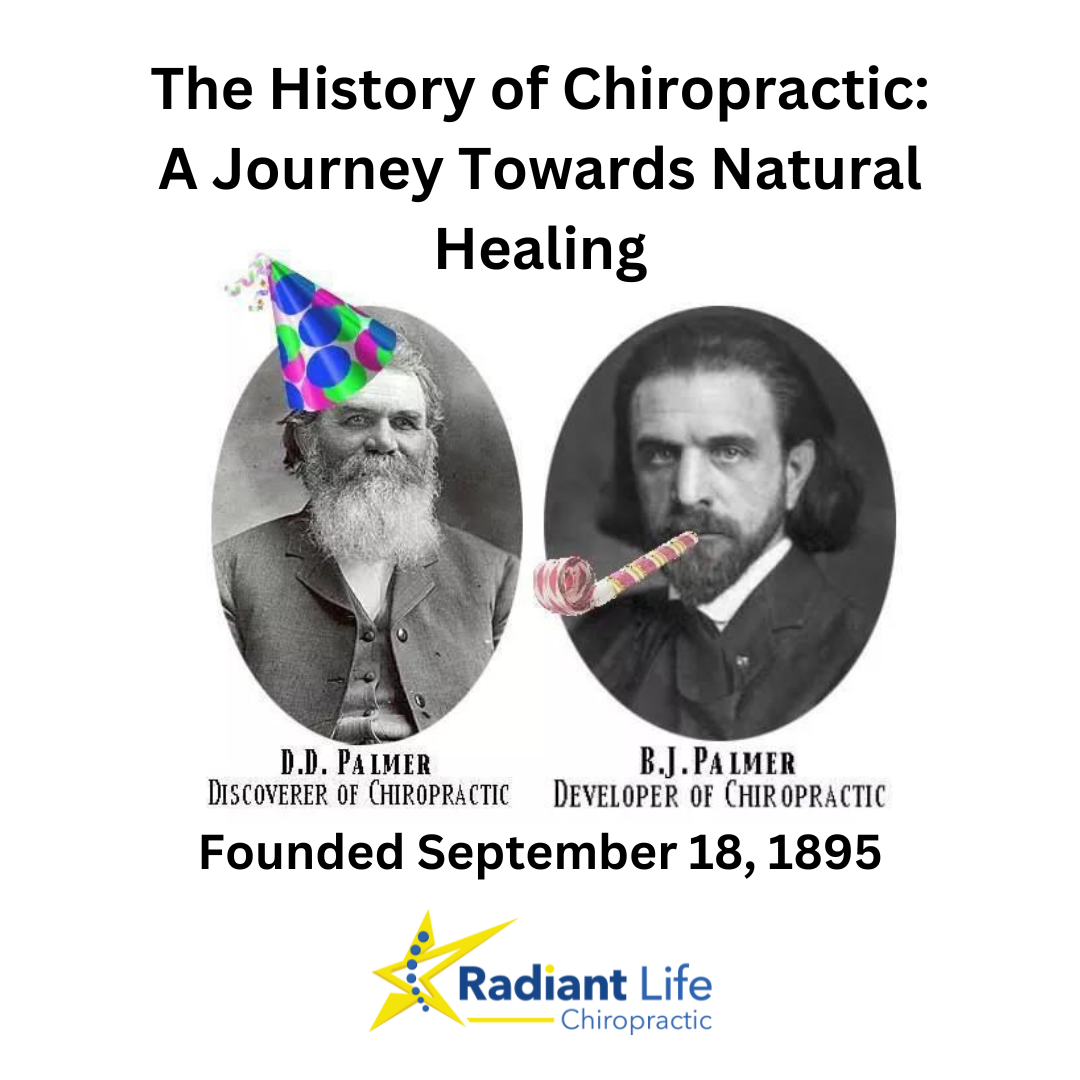
Chiropractic care traces its roots back to September 18, 1895, when Daniel David Palmer, a magnetic healer, made a groundbreaking discovery. He performed the first chiropractic adjustment on a man named Harvey Lillard, who had been deaf for 17 years. Palmer noticed a misalignment in Lillard’s spine and believed that by correcting it, he could restore his hearing. The adjustment was a success, and chiropractic was born.
Early Years and Development
In the early 1900s, D.D. Palmer’s son, B.J. Palmer, played a pivotal role in shaping chiropractic into a distinct healthcare profession. He established the Palmer School of Chiropractic in Davenport, Iowa, which became a leading institution for chiropractic education. B.J. Palmer emphasized the importance of spinal adjustments in maintaining health and well-being.
Chiropractic’s Struggles and Triumphs
Chiropractic care faced significant challenges during its early years. It was met with skepticism from the medical establishment, and legal battles were fought to establish its legitimacy. However, chiropractors and their patients stood firm, leading to the recognition of chiropractic as a legitimate healthcare profession.
The Science of Chiropractic
Over time, chiropractic care evolved to incorporate scientific principles. Research into the benefits of spinal adjustments, nervous system function, and the holistic approach to healthcare contributed to its credibility. Chiropractors began working alongside medical doctors and other healthcare providers to offer comprehensive care to patients.
Chiropractic Today
Today, chiropractic care is an integral part of the healthcare landscape. Chiropractors focus on the nervous system, primarily through the joints of the spine, to promote overall health and wellness. They help patients manage pain, improve mobility, and enhance their quality of life through natural, drug-free treatments.
Diverse Approaches to Care
Chiropractic has diversified over the years to include various techniques and specialties. Some chiropractors specialize in sports injuries, pediatric care, or geriatric care. This diversity allows individuals of all ages and backgrounds to benefit from chiropractic services. Our Hatboro office loves to serve entire families. We enjoy working with children, women during pregnancy, and athletes of all ages and abilities.
The Future of Chiropractic
Chiropractic care continues to evolve with advancements in research and technology. As an increasingly holistic and patient-centered approach to healthcare, it is likely to play an even more significant role in the future. Collaborations with other healthcare providers and a focus on evidence-based practice will further solidify its place in the healthcare ecosystem.
The history of chiropractic is a testament to the power of innovation, persistence, and a commitment to natural healing. From its humble beginnings to its current status as a respected healthcare profession, chiropractic care has come a long way. As we celebrate over a century and a quarter of this remarkable journey, we look forward to the continued growth and evolution of chiropractic in promoting health, wellness, and a higher quality of life for countless individuals worldwide. If you or a family member or friend are in the Bucks or Montgomery County areas, we would love to serve you through state-of-the-art chiropractic care. Call or book an appointment online for a complimentary consultation to see how we can help you. We are striving to create a healthier community, naturally, in the Warminster and Warrington region.

 Bottom Line:


 The title sounds like a tag line for a new movie. New research states that permanent bone structure changes take place at the back of the skull as a result of extended amounts of time in a forward head posture position. Authors of the study attribute the cause of the increased amount of forward head posture to increased time on technology devices such as phones and computers. The research evaluated x-ray findings of 1,200 subjects ranging from ages 18 to 86 years old. Evaluators call the small bump on the back of the skull an extension of the External Occipital Protuberance (EOP). A ligament and muscle attach to the EOP. Researchers found that an extra small bony growth was found at higher incidence in younger adults who had greater degrees of forward head posture. The small horn-like growth appeared to be caused by increased amounts of stress on the muscles, tendons, and ligaments in that area due to forward head posture. As stress loads increase in ligaments, muscles, and tendons for long periods of time, bony deposits form within the body as a protection mechanism.
 You may have heard the phrase “heart rate variability” since it has been getting a lot of attention in the media. It’s not as complex as it seems – your heart is supposed to vary its heartbeat, in response to the stresses of the day. When your heart and brain are working well together, your heart rate varies as it should, and you experience good health.
 Why it Matters:
 The good news is that you can experience a lot of relief by taking the pressure off of the nerves. Research has shown that
  Why it Matters:
 Why it Matters:
 But even after correcting for those factors, there was a key characteristic that seemed to show up with the people who had the