

chiropractors montgomery county pa

20 Ways To Improve Your Mood

I recently read a list published of twenty methods to improve your mood. In the sometimes stressful times that we live in, it seemed like a good list to pass along. Here it is:

  1. Write a to-do list – If your mind is full of thoughts and responsibilities, try a to-do list. Empty out your head onto a pad or notebook, and you’ll feel lighter – plus, you can follow up easier when you put it on paper, especially if you assign target dates. Clear some memory, write it down.
  2. Take a walk – Exercise gets your endorphins, your feel-good chemicals flowing. Movement gives you positive energy.chiropractors montgomery county pa
  3. Eat some chocolate – Chocolate also turns on your feel-good hormones, just don’t overdo it.
  4. Wake up your sense of smell – The scent of baking cookies, the aroma of beautiful roses, inhaling sea air – our noses help us enjoy our food, as well as giving us vital information about our environment. Breathing itself is constructive, and when you add a meaningful and pleasing smell, it’s even better.
  5. Get your hands dirty – Gardening is relaxing on so many levels – communing with nature, holding life in your hands, planting and nurturing – it all makes you feel good, like you’re doing something that matters.
  6. Listen to music – Everyone has personalized taste, but when most people hear music they enjoy, it makes them move their bodies, breathe in rhythm and stretch their imaginations. Your brain makes more feel-good chemicals, you get calm and happy, and it happens fast.
  7. Dance – Moving to music is universally accepted as great exercise and beautiful art, and it is also a great stress-buster and mood booster. Regardless of your experience or skill level, dancing makes you feel great.
  8. Visit with friends – “The Blue Zones,” a book on longevity and quality of life, points out that having a social support structure is essential in long-living cultures. Spending quality time with family and friends soothes you, grounds you and provides a special kind of pleasure.
  9. Have some green tea – The antioxidants in green tea inspire better immune function and improve well-being. Your brain loves green tea, because it turns on more of those feel-good hormones.
  10. Pay it forward – Kindness is a secret way to feel good – it costs nothing, and makes a difference in someone’s life. Be nice, it helps you too.
  11. Buy a full spectrum lamp – Some people are sensitive to the change of seasons, so special lights that imitate natural sunlight can stimulate your brain to make more happy chemicals.
  12. Bring a smile – Your facial muscles are triggers for emotion, and are triggered by it – you can make yourself feel happier by smiling, which signals your brain that something is good, so it responds accordingly.
  13. Pet a dog – Snuggling with a cute pooch reduces your stress hormone, cortisol, so you feel more relaxed and less stressed.
  14. Tune out – Learning to meditate or quiet your internal dialogue is a sure way to lighten your load and improve your mood. Getting silent on the inside is time-tested and effective at reducing negative emotions and making you feel better overall.
  15. Choose a fresh look – A new haircut, a new outfit or at least a new combination of clothes or jewelry will give you a new energy field. By changing your look, your also change your outlook.
  16. Get organized – Tidy up your desk, workspace, bedroom or living space. Clutter distracts us, and annoys us subconsciously – straighten up your things, reclaim control over your territory, and see how it influences your mood.
  17. Stretch – When you tense and relax your muscles, you increase circulation, breathe more deeply, and generate more happy hormones. It will also help you stay present, instead of worrying about whatever was on your mind.
  18. Let the sun shine in – Open your shades and let the beautiful rays of the sun come into your home or office. It will lift up your spirits and put a smile on your face. Sun increases your production of serotonin, another of your brain’s feel-good chemicals. Let the sun cheer you up naturally!
  19. Take a nap – Most of us are sleep-deprived without realizing it, and the stress hormone cortisol spikes with fatigue. A little power nap will leave you feeling refreshed and ready for the rest of your day.
  20. Take a break from social media – Many studies link stress to screen time – give yourself a little downtime without your phone, tablet or TV, and you’ll be surprised how much calmer, happier and less jangled you feel.

There are many ways to bring down your stress levels and bring up your happiness – regulating your mood is a habit that comes back to reward you many times over. Discover ways to make yourself feel good naturally – it will improve your quality of life.
health tips bucks county

The Special Nerve that Connects all of Your Vital Organs and Why It’s So Important

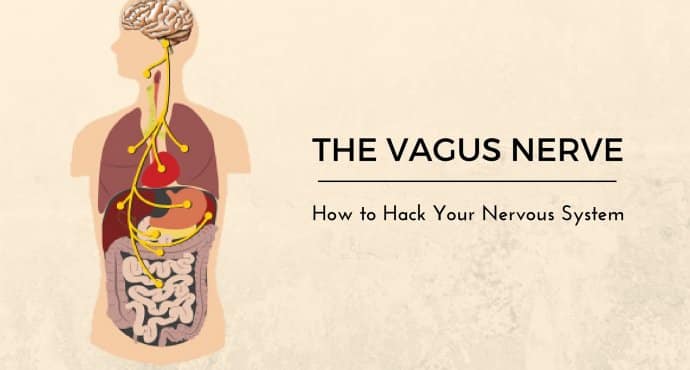
The vagus nerve starts in the brainstem, just behind the ears. It travels down each side of the neck, across the chest and down through the abdomen. “Vagus” is Latin for wandering, and indeed, this bundle of nerve fibers moves through the body, networking the brain with the stomach and digestive tract, lungs, heart, spleen, intestines, liver, and kidneys. This doesn’t include the connection to a range of other nerves that are involved in speech, eye contact, facial expressions and even our ability to tune into other people’s voices.

health tips bucks countyThe vagus nerve is made of thousands of nerve fibers and 80 percent of them are sensory, meaning the nerve reports back to your brain what is happening in your organs. Operating below the level of our conscious minds, the vagus is vital for keeping our bodies healthy. It is essential to the parasympathetic nervous system, which is responsible for calming organs after the stressed “fight or flight” response to danger. Not all vagus nerves are the same though. Some people have stronger vagus activity, and this means their bodies can relax faster after stress.
The strength of your vagus response is known as your vagal tone. Research shows that a higher vagal tone makes your body better at regulating blood glucose levels, reducing the likelihood of diabetes, stroke and cardiovascular disease. Low vagal tone has been associated with chronic inflammation.

As part of the immune system, inflammation has a useful role helping the body to heal after an injury; however, it can damage the body if it persists when it is no longer needed. One of the vagus nerve’s jobs is to reset the immune system and switch off production of molecules that stimulate inflammation. Low vagal tone means this regulation is less effective and inflammation can become excessive and chronic.

The vagus nerve acts as a two-way messenger between the brain and other organs. Because of the role of this nerve in a range of chronic inflammatory diseases, it has been studied as a possible treatment. The implications of being able to improve vagal tone are potentially enormous.

The interesting thing is that there are ways to improve the tone of the vagus nerve. One of the easiest and cheapest ways is to perform deep breathing so that you are activating the diaphragm. You can also take time to socialize and laugh with others. Meditation, singing, humming, chanting and gargling can stimulate the vagus nerve. Chiropractic care has also been shown to improve vagal tone.

If you or someone you love is chronically dealing with stress, it may be a good idea for them to get checked out by a chiropractor to make sure their nervous system is functioning well. It can improve their bodies response to stress and regulate inflammation. If located in Bucks County or Montgomery County, then Radiant Life Chiropractic of Hatboro would love to help!

mind & body

How to be Happier

Who wouldn’t like to be happier? Besides the obvious, feeling better, being good company, and avoiding boredom, there are health benefits that happen automatically as we generate and express happiness.

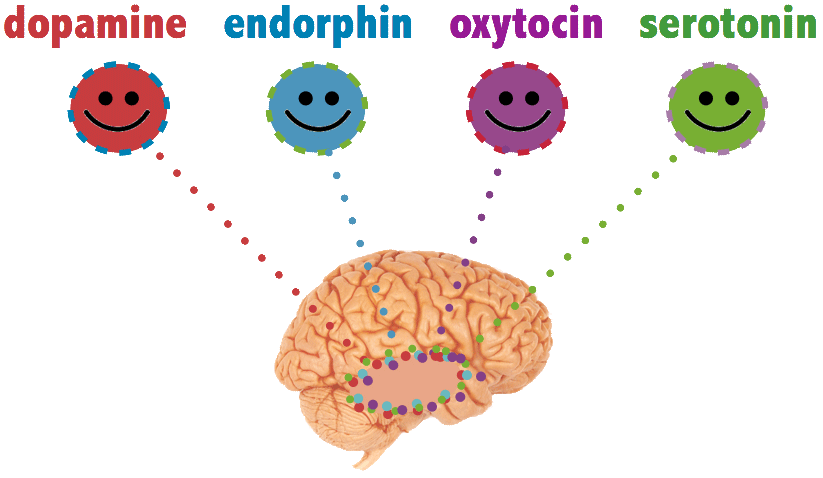
Let’s look at the way you create happiness through four important chemicals, known as hormones, that you produce for yourself with your brain and body.

mind & bodyThere are four important hormones that generate the shades of happiness in your mind and body. Don’t be intimidated by these scientific terms – they are easy to understand once you get comfortable with them.


The first type of hormone to look at is endorphins, substances that shut down pain, like for example when you exercise. They generate the rush you feel when you complete a vigorous workout. Endorphins are also produced when you experience something funny, like jokes or your favorite comedy show. So if you want more of this happiness hormone, exercise regularly and your body will get good at creating it. Also, read, listen to or watch something you find funny or entertaining, and that will bump up your endorphins.

The second happiness hormone is dopamine, which is turned on when you finish or complete something, leading to feelings of satisfaction. Dopamine spikes when you feel appreciated for something you did, making you feel successful due to your achievements. Any new experience where you accomplish something will turn on the dopamine, so you feel good about yourself.

The third happiness hormone is serotonin, which is produced when you do something nice for someone, or serve them well. Solving problems for others, offering information that helps someone, or inspiring other people to do good will generate serotonin.

The fourth happiness hormone is oxytocin, which is produced when you are close with or touching someone. When you shake hands, hang out with family or embrace someone you care about, your body spills oxytocin into your bloodstream, producing feelings of pleasure that lead to happiness.

When you are happy, the challenges of your life become more manageable, so you can handle the stresses you encounter without undue wear and tear on your mind and body. And there are many practices and actions you can use to get these happiness chemicals flooding your system with good feelings.

Of course, your definition of happy may be somewhat different from someone else’s but there are many ways you can personalize this happiness chemistry, and turn on the joy for yourself. Try some or all of these easy techniques for getting happier.

For example, if you want your kids to be happy, consider this – you can encourage them to engage in physical activity, which will fill their systems with endorphins. Get them to complete their school assignments and homework, and acknowledge them for it, and they’ll be rewarded with dopamine. Assist them in seeing the value in charitable pursuits or volunteer work, or get them to help out around the house, and their serotonin will flow. And of course, hug them if you want to boost their oxytocin.

As far as being happier yourself, there are so many options, you’ll surely be able to find a recipe that works for you. You could simply sleep more, or eat better, or exercise regularly. You could practice mindfulness, or conquer one anxiety, or lose one bad habit. You could learn to meditate, or do yoga, or study martial arts. You could spend ten minutes or more outdoors every day appreciating nature, or develop more supportive self-talk. There are also many wonderful books, recordings and videos that can entertain you, focus you on happy thoughts, and give you a sense of purpose to move forward with a pleasant outlook.

Whatever you decide, you can be happier, in your family, your work and your life in general, based on your lifestyle decisions. It’s your choice – choose wisely, and you and those you care about will have a happier, longer, more productive life.

exercising in montgomery county pa

Ease Back Into Exercise

If you’re going to exercise for the first time in a while, your underused muscles may not be ready for too much shock or strain. For that reason, it is essential that you warm up, stretch, and ease into exercise – if you don’t, you risk injury, which would set you back in your schedule, not to mention hurting a lot.

So, it makes sense for you to stretch and activate the muscles you’re going to be using in whatever exercise you decide to do.

exercising in montgomery county paFor example, if you’re going for a walk, then to prepare yourself, start by taking a few nice, deep breaths to bring air into your lungs and get your rib cage moving, stretching and relaxing the small muscles in your chest.
Then, gently and slowly raise one knee, holding onto something to steady yourself if necessary, stretching your lower back and leg. Rotate your foot at the ankle in both directions, then point your toes and lift them, putting your foot through all ranges of motion before coming to a neutral position. Repeat this routine on the other side.

Bend forward gently and slowly, only as far as it’s comfortable, and if you can, let your arms dangle. Feel the stretch in the backs of your legs and calves. Keep your knees as straight as you can without hurting.

Carefully straighten up, put your hands on your hips, and bend gently and slowly from side to side, only as far as it’s comfortable, loosening up your torso. You should find that after a few repetitions it gets easier and you can bend farther. Don’t overdo it.

Bend slightly backward, only to a point of comfort. Relax your arms and shoulders back, and feel the stretch in your chest and abdomen. Carefully straighten up to a neutral position, and then rotate your body clockwise and counterclockwise, gently twisting your body, letting your arms swing freely with your rotation. Don’t overdo it, just feel your body loosening up with the gentle twisting motion.

All of this stretching prepares your muscles, your breathing and your circulation to start your exercise. It reduces foot and leg injuries, energizes your core and relaxes your lower back. Finish up by taking several slow, deep breaths, and you’ll feel ready to begin your exercise.

If something feels like it needs to be stretched, warmed up, or left alone, listen to your body. Don’t push too hard at any point in your early exercise. When you are in proper shape, there will be times when you may exercise very, very intensely – but not until you warm up properly, and not until you get into suitable condition to handle such aggressive movement. It’s great for you, but only when you are up to it.

Whatever exercise you prefer, be sure to get your body ready so you don’t hurt yourself, which would mess up your exercise for days, weeks or longer. Develop a good warm-up routine, and you’ll get the best results!

improve posture

Ergonomics: Good Posture at Work

Everyone who works in an office setting, at work or at home, is subject to the challenges and opportunities of designing the optimal workspace. Developing some simple habits and adjustments to your work area can lead to less stress, more productivity and less risk of injury or pain.

improve postureAccording to Drs. Krista Burns and Mark Wade, co-founders of the American Posture Institute, taking short “posture breaks” will avoid aches and pains and decrease stress. These little interludes stretch muscles that become tightened from staying too long in the same position.
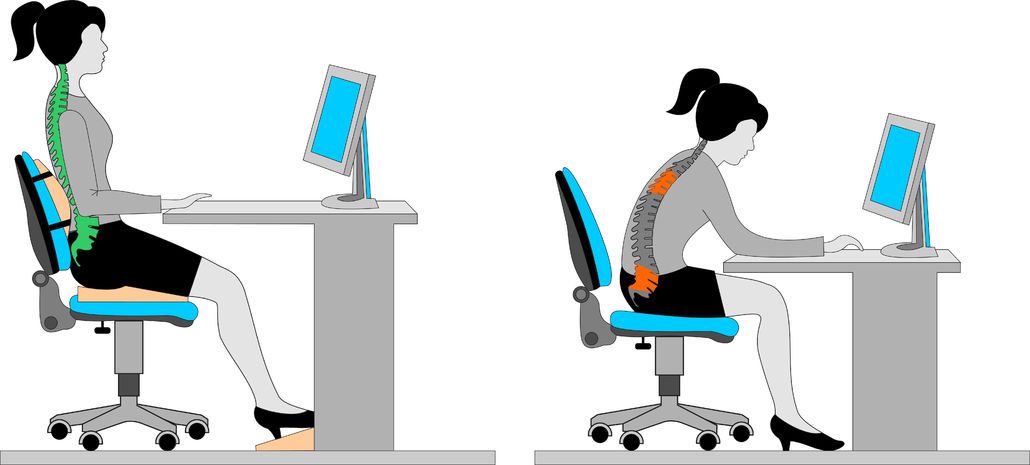
They recommend a thirty-second break twice or three times an hour. One way to take such a break is to shift yourself to the front of your chair. Spread your arms and thrust your chest forward. Relax your head backward to a point of comfort, and just settle into that for a half a minute. You’ll be amazed how rejuvenated you feel, especially at the end of a long day.

Arrange your workspace so everything is within easy reach. You want to minimize excess movement and increase efficiency. Sit so you can keep your elbows close to your body and your wrists straight. Relax your shoulders. Keep your hips, knees and ankles at 90° with your feet flat on the floor or on a stool or footrest. Your head should remain upright with your eyes straight ahead – adjust the screen to your eyes, rather than moving your head to the screen. Your back should be straight against the back rest, with a cushion or roll supporting your lower back if desired.

A safe and well-designed workstation can reduce stress and increase productivity. Good ergonomics avoids unnecessary injury, promotes comfort and makes you less irritable. And, healthy ergonomic posture, like all good posture, is good for your brain.

If you want to be sure of your postural health, consult your family chiropractor, your neighborhood spinal specialist. We can help you learn how to take better care of your brain, spine and nerve system, so you and your family can be as healthy as possible.

chiropractic doctors montgomery county pa

Understanding Your Body’s Heating and Cooling System

Your body is the most complex and astounding machine ever. While it is far more sophisticated than anything we can invent or manufacture, there are many aspects of your body that act like a machine would – we need fuel or a power source, we need to be cleaned and maintained, and we need to regulate our temperature, because being too hot or too cold will compromise normal function and prevent proper performance.

chiropractic doctors montgomery county paThere are three main ways the body generates heat. First, every cell in your body has to breathe, and that respiration turns glucose into energy. More than half of that energy is released as heat.



Second, your muscles produce heat in two ways. When you exercise, your cells have to increase that respiration and churn out energy molecules called ATP. The muscles also create heat from the friction of the muscles moving against each other. Finally, digesting your food, absorbing the nutrients in that food, and processing those nutritional building blocks also generates heat. In fact, all metabolic activity makes at least some heat, highest after eating protein, and less after eating carbohydrates and fats.

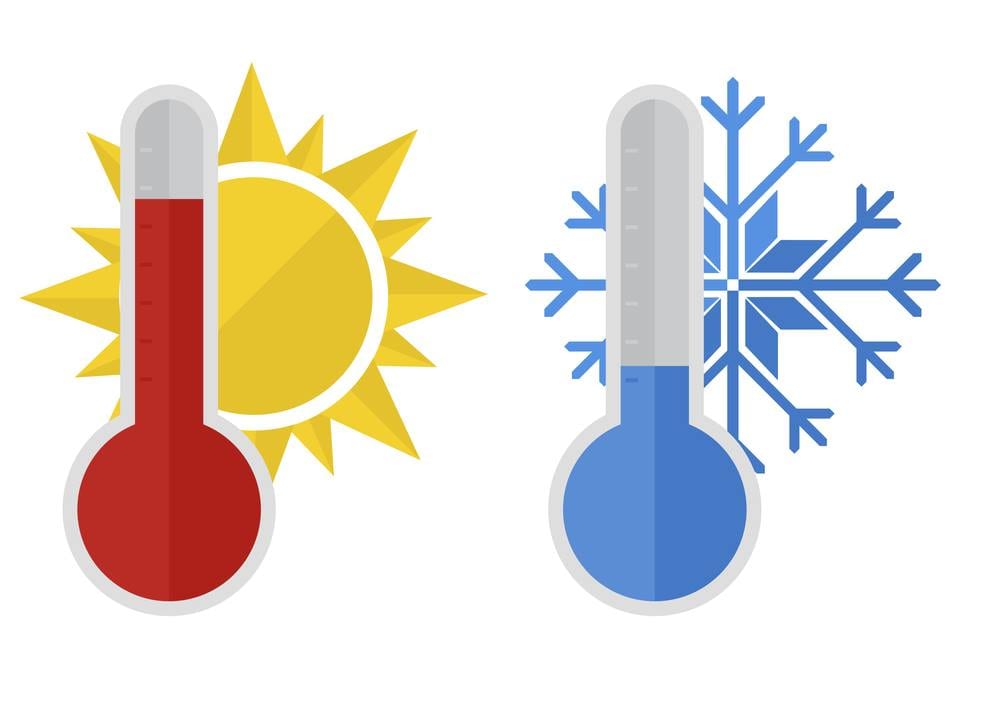
There are four major ways you lose heat. The most obvious one is radiating heat out from your skin. Heat will move from warmer to cooler, so when the air around you is cooler than your body temperature, which it usually is except on the hottest days, you will tend to lose heat through your skin.

You also lose heat through your blood vessels. All of the tubes that carry blood from the heart are equipped to constrict or relax as needed. When the blood vessels under the skin relax, it’s called cutaneous vasodilation.

You have seen the effects of vasodilation many times – whenever you are overheated and your skin gets flushed or reddened, that’s your blood vessels near the skin dilating. They do so to bring warm blood nearer to the surface so it can cool off, since the air outside of you is generally cooler than your core temperature. If you were to dunk your hands in a bowl of hot water, they get red, because the vessels would relax to let the blood flow into your hands to dissipate the heat.

The opposite is also true – if you plunge your hands into cold water, the blood vessels will constrict to preserve heat, and your hand will look white as the blood vessels tighten to reduce blood flow and therefore heat loss.

The third way we vent heat is through the evaporation of perspiration off your skin. When you are overheated, your body pours sweat out through the skin, which then absorbs heat as it transforms from liquid to gas, from sweat to vapor. This eats heat, so you feel cooler after you perspire.

It should be noted that when the humidity is very high, meaning there is a lot of moisture in the air, this cooling mechanism is hampered. Sweating is designed to cool you down by using the body’s heat to evaporate the perspiration, so if it’s very hot and humid outside your body, the sweat doesn’t evaporate efficiently, and cooling is diminished.

The fourth way we dissipate heat is through breathing. When we exhale, we lose heat and water. Animals who don’t sweat like humans, like dogs for example, depend on panting to rid themselves of excess heat.

Your body naturally knows what its right temperature should be, and this is monitored and regulated by part of your brain called the hypothalamus. The hypothalamus is like a control center – if the body gets too warm, it turns on sweating or panting to cool it down, and if the body gets too cold, it triggers shivering and the production of hormones that increase metabolism to warm you up.

So, your brain is central to maintaining and resetting your body temperature, balancing heat and cold so your body works the best it can. Modern research shows that keeping your spine healthy is essential to keep your brain healthy. And the best way to keep your spine healthy is to visit your doctor of chiropractic.

At Radiant Life Chiropractic, your family chiropractor will advise you on brain and spine wellness, so make sure you and your family get periodic examinations. Better safe than sorry, especially in the hot summer months when you need your body to work the best it can.

Ask your chiropractor how chiropractic care helps your body to function better as well as feel better!

body management montgomery county pa

Managing Your Body Heat

Summer is often a time to play, to exercise, to get projects done, or just to relax and have fun with family and friends.

But in the hot weather, there are some precautions you can take to safeguard your brain and body, and avoid unnecessary risk.

body management montgomery county pa

Your body has to work harder when you are heating up – the part of your brain that balances temperature, the hypothalamus, works with the skin to heat and cool the body by using sweat glands and blood vessels to vent or conserve heat.

When you are too hot, your sweat glands release perspiration, which cools us down, but the water has dissolved minerals in it, which must then be replenished.

Some of these minerals are referred to as “electrolytes” because they help the body’s chemical reactions by carrying an electrical charge.

Magnesium and potassium are especially important – magnesium assists in hundreds of those chemical reactions, and specifically helps your body to regulate temperature. Potassium helps to balance fluids, and so is essential both to cardiovascular health and temperature regulation.

It’s important to note that soda pop and sugary drinks rob the body of vital potassium, so resist the urge to satisfy your thirst with such sweetened beverages – your body is asking for water, so hydrate it. If you need to, add a squeeze of lemon or lime, but to manage your body heat, hydrate! Drink water and replenish electrolytes with fresh fruits and vegetables, or even a mineral supplement if you need it.

Your brain needs water and these electrolytes to maintain good health and to cleanse itself while you sleep – so manage your body heat, and it will help you to stay healthy.

Our Veterans Deserve the Best Care

back pain care in bucks countyOur susceptibility to physical pain can come from many factors, and the types of pains we are susceptible to can vary from person to person. For example, veterans are found to be at risk of chronic pain due to such a physically demanding career. Not only are veterans highly susceptible to physical pain, but they are also likely to experience PTSD or depression, to be smokers, and to have a substance use disorder. When it comes to their pain management, it’s not uncommon to want to treat the symptoms to provide relief. Unfortunately, for many veterans, this means heavy medication use, often including addictive and sometimes dangerous opioid medication such as oxycodone and hydrocodone. However, what would happen if veterans’ pain was looked at from a different approach, in which addressing the cause of health concerns was the main focus rather than just managing the symptoms?

A recent study published in Pain Medicine looked at the rates of opioid usage among veterans before and after starting chiropractic care. 31% of veterans studied had been prescribed opioids, 56% were in moderate to severe pain, and 20% were diagnosed with a substance abuse disorder. What researchers found was astonishing: the rate of opioid usage among these veterans significantly dropped within the first month of starting chiropractic care in Montgomery County, PA. For those who put their lives on the line to serve our country, this is amazing! By working to eliminate the cause of pain rather than merely treat the symptoms, we can let our bodies heal. Chiropractic care in Bucks County allows each of our bodies to function at 100% of our best: because we deserve it!

back soreness montgomery county pa

How You Can “Un-Pinch” a Nerve

Bottom Line:

Pinched nerves are not exactly what most people would call a good time. A pinched or compressed nerve can cause pain, numbness, tingling, or weakness in your arm or leg. It can be debilitating! When the nerves are leaving your spinal column they have very little protection. And if a disc, ligament, or bone spur get near a nerve…ouch! The pain can start there and then travel the entire length of that nerve root resulting in pain that radiates into your arms and legs. Let’s just say that your nerves don’t like being pushed around.

Why it Matters:

back soreness montgomery county paThe good news is that you can experience a lot of relief by taking the pressure off of the nerves. Research has shown that chiropractic adjustments can help reduce the pinching or compression on those delicate nerves roots. And with less pressure on the nerve, you can finally find relief.

– Your nerves communicate with every organ, tissue, and cell in your body

– Bone spurs, ligament overgrowth, or disc problems can cause pressure on these nerves

– Adjustments gently open the holes, or canals, of your spine, thereby decreasing the pressure on the nerves to help you function and feel better!

Next Steps:

Take a look around and do some “people watching” today. You will see that many people walk crooked or bent over towards one side. Sometimes this is the result of a pinched nerve. They are trying to lean away from the pain and open up those nerve channels. But, by staying active, maintaining a full range of motion, and getting periodic chiropractic care– you can count on standing tall for years to come!

Science Source:

Cervical radiculopathy: a systematic review on treatment by spinal manipulation and measurement with the Neck Disability Index. Journal of the Canadian Chiropractic Association 2012. Symptomatic, MRI Confirmed, Lumbar Disc Herniations: A Comparison of Outcomes Depending on the Type and Anatomical Axial Location of the Hernia in Patients Treated With High-Velocity, Low-Amplitude Spinal Manipulation. Journal of Manipulative and Physiological Therapeutics. 2016.

Bio-Hacking Your Nervous System Naturally

Bottom Line:

Your life is experienced through your nervous system. Think about that. Every thought, breath, heartbeat, memory, and movement happens in coordination with your central nervous system. Researchers have found that nerve signals can travel from your brain to your body at more than 250 miles per hour. Your brain is the master control system of your body with signals and messages starting in the brain and then heading out and down to your body. But can messages travel the other way? What if I told you there are ways you can impact your brain by moving your spine? It’s true…

chiropractic services bucks countyWhy it Matters:

Top researchers have found that specific movements of the spine, including the motion that happens during a chiropractic adjustment, can provide a multitude of benefits to your brain and nervous system. Adjustments activate the nerves that detect and sense motion. When those nerves are activated, it stops (or gates) the nerves that deliver pain signals. That is one of the reasons why adjustments provide pain relief. They literally “turn off” the pain sensors! Perhaps even more exciting is the emerging research that has shown adjustments can increase cortical drive. That’s a fancy way of saying researchers have found adjustments can make you stronger!

– Your entire life is experienced through your central nervous system- every thought, memory, and action.

– Movement of your spine can activate your central nervous system and brain

– Emerging research has shown chiropractic adjustments can help reduce pain, improve function, and even increase strength!

Next Steps:

Chiropractic care has been helping people live their best life for over 100 years. Having a higher quality of life and feeling better (with less pain) are two of the most popular reasons why people seek chiropractic care. But new research into sports performance, strength, and how the adjustment can improve brain function have a lot of people excited. We would love to hear how chiropractic care has changed your life!

Science Source:

Mechanism of action of spinal manipulative therapy. Joint, Bone, Spine 2003. Neurophysiological effects of spinal manipulation. Spine Journal 2002.