What Happens When You Hear a “CRACK” in Your Spine?
Bottom Line:
You turn your head or bend down to lift something and “CRACK”! What is it? Did you injure something? The first time that happens can be terrifying. Well, you don’t need to worry. That cracking sound is probably not a broken bone. It typically occurs in the facet joints, or knuckles, of your spinal column and it can be completely normal. Your facet joints are designed to help your spine move through a full range of motion.
 Why it Matters:
The facets are little joints on the back side of your spine. Similar to your knuckles, they have a small capsule around them for lubrication and support. When a facet joint is stretched open, gas within the joint is released, making a crunch or cracking sound. The release of gas is perfectly normal and happens because of the negative pressure in the joint. Sometimes adhesions can occur in the joint making it painful to move. That is why after a chiropractic adjustment many people feel better and have an improved range of motion. Adjustments help the facet joints move more naturally with fewer restrictions.
– Cracks and pops in your back and neck are typically caused by the release of gas within the joint (like a knuckle)
– Adhesions in the joints of your spine can restrict your range of motion and contribute to degenerative changes
– Adjustments reduce the adhesions in the fact joints resulting in pain relief and an improved range of motion
Next Steps:
While many chiropractic techniques create a “cracking” or “crunching” type sound- not all do. Low-speed techniques also improve the motion of the facet joints, sometimes without any sound at all. And here’s a tip to share with your friends- stubborn headaches are frequently caused by irritated facet joints. If you know someone who suffers from headaches and works on a computer most of the day- their facet joints may be to blame. Share this paper with them and let them know a chiropractic adjustment may be just what they need!
Science Source:
Effects of side-posture positioning and side-posture adjusting on the lumbar zygapophysial joints as evaluated by magnetic resonance imaging: a before and after study with randomization. JMPT 2000. Neurophysiological effects of spinal manipulation. The Spine Journal 2002.

 Spinal discs are the shock absorbers between the bones, or vertebrae, of your spine. The discs have a tough outer ring and a jelly-like center. Their job is to help us move, bend, and twist while absorbing the weight of gravity. But, over time, our spinal discs can become degenerative. Injuries, aging, and the effects of gravity all contribute to disc degeneration. The good news is that degenerative discs rarely cause pain unless they budge or herniate, placing pressure on the spinal nerves. So how you can slow down the degenerative process and keep your discs healthy? Keep reading…
 Sleep
Sleep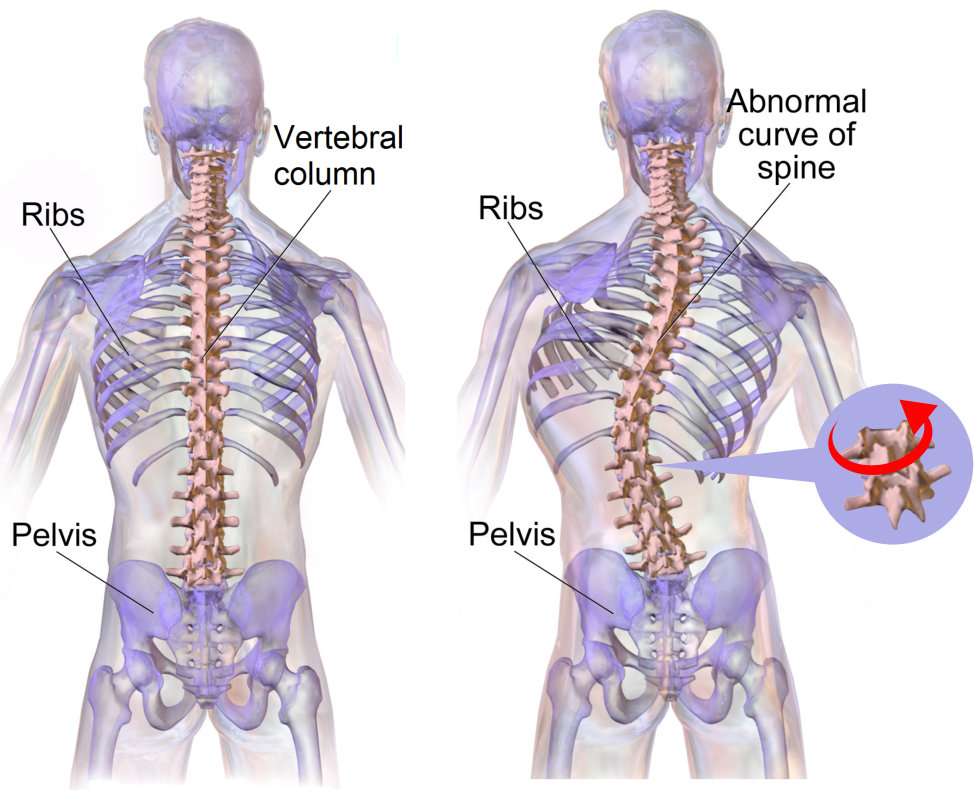
 They also probably planned a yearly physical and a dental examination as well. But many families don’t yet realize that an examination of the brain, spine, and nerve system might be the most important check-up of all.
 Athletes have been benefiting from chiropractic care for many years; however, it has only recently been receiving attention from the media. Athletes of all types, from the weekend warrior to the world-class athlete, utilize chiropractic because it is a drug-free way to better health and performance. It is not only about treating injuries. Athletes often seek care to prevent injuries before they occur and to improve performance. They want to gain an edge on the competition. Sean Atkins, a PhD Exercise Physiologist, states, “I would estimate that in excess of 90% of all world-class
  Some people estimate that there are over 100 different types of headaches, and each type is categorized as either primary or secondary. Primary headaches are recurrent headaches that are not caused by underlying disease or structural problems. 90% of headaches are primary headaches. Secondary headaches are caused by some underlying disease or condition. Tension headaches and migraine headaches are by far the most common types of headaches, but other types such as cluster headaches and sinus headaches are important.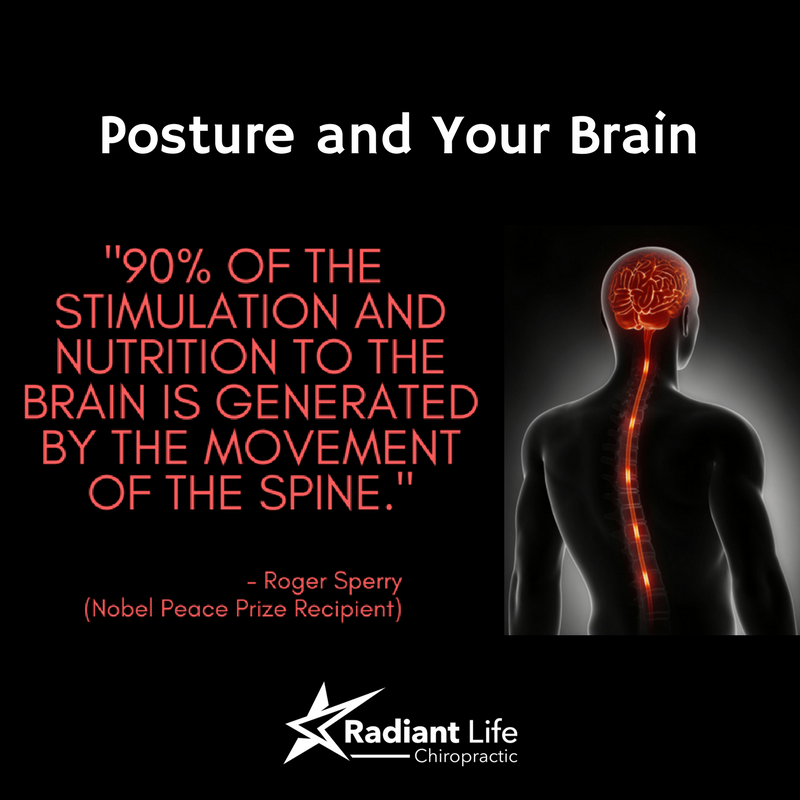
 This means that having a healthy spine is essential if you want a healthy brain, and this is the leading reason why you and your family need to take the best care possible of your spine – not only does it reduce the likelihood of painful problems, it enhances your brain function which makes you healthier in every way. The first thing you can do to take care of your spine is to develop the habit of good posture. According to the American Posture Institute (API), “Modern sedentary living, misalignments and faulty movements in the spine combined with poor posture diminish nutrition and stimulation to the brain. How well we eat, move, think, connect and cope with stress determines our destiny.”

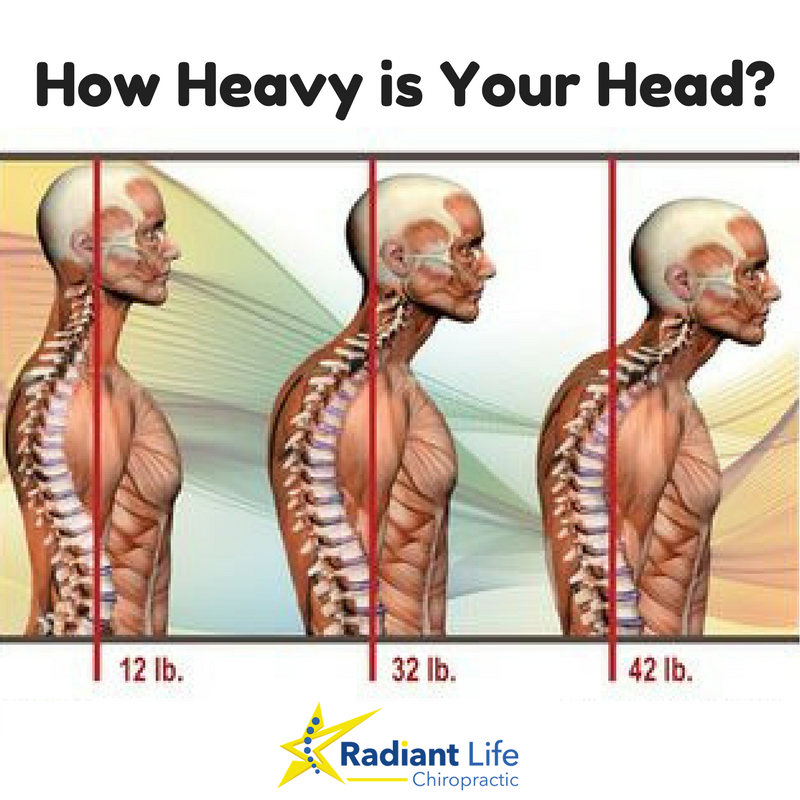
 Understanding forward head posture and how this creates the potential for injury and chronic musculoskeletal problems is extremely important. Normally, looking at someone from the side, the ear should be directly over the shoulder. As you can see in the image, for every 1 inch the head moves forward, it increases the force stressing the head and spine by 10 pounds. Not only does it increase the loading on the spine, which over time can lead to degeneration and wearing of discs and joints in the spine, it also causes certain muscles and ligaments to become “facilitated.” This means they must contract much harder to maintain that forward head posture. Think about holding 12-15 lbs (the weight of a bowling ball and the weight of your head), out away from your body. It would be harder to hold there than close to the body, right? Well, this is like the weight and stress we are placing on our spine and weight-bearing joints.